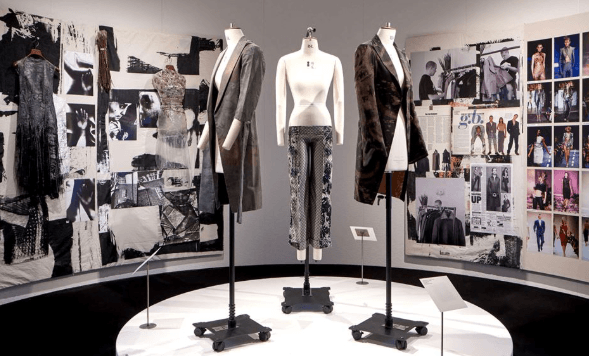
Exhibitions act as living notebooks, where garments become arguments about time and taste. Curators frame silhouettes, textiles, and context into legible biographies that designers absorb without always naming. Archived notes and catalogs braid with present collections, nudging choices in subtle, persistent ways. The museum floor becomes a testing ground where ideas take shape, and icons emerge not by decree but through a quiet conversation between space, memory, and audience. The next step awaits, shaped by that dialogue.
How Fashion Exhibitions Rewrote Design Narratives
Fashion exhibitions have long acted as laboratories where garments migrate from mere objects to narrative artifacts, transforming design decisions into storytelling for a broader audience. They refract practice through design pedagogy, revealing how exhibitions frame intention and method.
Curator driven storytelling reframes aesthetics as inquiry, guiding audiences to interpret silhouettes, materials, and context, while designers absorb lessons about audience reception and cultural resonance.
The Museums and Shows That Shaped Today’s Icons
The museums and shows that shaped today’s icons function as incubators where curated voices, architectural spaces, and logistical timing converge to elevate garments into legible biographies.
They reveal how relevant exhibitions curated by curators, critics, and curatorship sculpt public memory, turning wardrobes into cultural artifacts.
Iconic designers emerge through dialogues between galleries, archives, and audiences, redefining fashion’s social legibility.
Threads That Tie Past Exhibitions to Current Collections
What threads connect past exhibitions to today’s collections, and what conversations do they sustain across time? Design narratives emerge where archived fabrics, catalog notes, and curatorial dialogues braid into present silhouettes. Museum icons flicker in new light, reframing identity and rebellion. These continuities illuminate evolving aesthetics, while audacity and restraint negotiate meaning, guiding designers toward freer, resonant forms.
How to Read an Exhibition’s Influence on a Designer’s Next Move
Whether a show’s graphic vocabulary or its subtler curatorial prompts reverberates, designers translate exhibitions into the next line through a patient deciphering of cues, not a direct copy. The read is comparative, not mimetic: researchers map design museum correlations, tracing how mood, material, and rhythm reappear. Archival revival triggers reshape collections, guiding a deliberate, elevated march from exhibit to atelier.
See also: The Future of Sustainable Technology
Frequently Asked Questions
How Do Curators Measure an Exhibition’s Impact on Designers Long After Openings?
Curators measure an exhibition’s impact by tracing long term influence through follow-up collections, collaborations, and critical dialogue; they assess enduring resonance, audience reinterpretations, and market signals, offering a nuanced, long view that captures measuring influence beyond openings’ immediacy.
Which Exhibitions Sparked Cross-Disciplinary Collaborations Beyond Fashion?
Cross disciplinary collaborations emerged when exhibitions bridged fashion with art, architecture, and technology, prompting cross pollination through exhibitions that invited designers to dialogue with sculptors, engineers, and filmmakers, revealing new vocabularies and expansive creative networks beyond attire.
Do Geographic Regions Influence Which Exhibitions Resonate Most With Designers?
Regional markets influence designers: exhibitions in distinct locales align with textile traditions and cross cultural exchanges, shaping aesthetic preferences. They catalyze resonance through digital showcases, while geographic variety sustains experimental curiosity and freedom within contemporary fashion storytelling.
How Do Temp Exhibitions Compare to Permanent Retrospectives in Inspiring New Lines?
Temp exhibitions tend to spark rapid, iterative experiments, while permanent retrospectives cultivate long-term reverence and foundational reinterpretations; together they illuminate divergent creative tempos, where fleeting shows provoke bold bets and enduring retrospectives anchor technique, tradition, and recurring stylistic dialogue.
What Role Does Audience Interaction Play in Shaping Design Directions?
Twenty-five percent of attendees engaged in audience immersion, and designers reported strong tactile feedback guiding texture choices. The role of audience immersion translates into iterative silhouettes, while tactile feedback informs fabric weight, drape, and finish, shaping bold, freedom-seeking design directions.
Conclusion
Exhibitions choreograph a designer’s memory, stitching past wardrobes into future silhouettes. Each display becomes a whispering mentor, translating archived fabric into present intent and future risk. In galleries, silhouettes converse with space, materials murmur about meaning, and curators draft a map for innovation. The result is a looped thread—history guiding invention, invention recalling history—until fashion moves as a living archive, endlessly reframing itself through the eyes of designers, audiences, and time.